Memoirs of GD Fell
Main menu
- Title
- Preface
- The Early Years Carlisle
- The War Years
- Post War The Navy
- Beaumanor
- Cyprus
- Loughborough
- Kantara
- Shepshed
- Cheadle
- The Coup
- Repatriation
- A New Chapter
- Glossary
- Appendix A Direction Finding
- Appendix B Nick's Story
Page 19
On about the 16th March the engines started up, the anchor was lifted, and I became a proper sailor for the first time. When the ship began moving I was between decks, that is, not on the top deck where you can see the sea, so I was rather apprehensive as to whether I was going to be seasick. When I got the opportunity I went onto the upper deck and was surprised to find a lot of the sailors were being seasick, as I didn’t feel any discomfort whatsoever. Ginger Hilton was one of those who was seasick and unfortunately for him he never got over it. Every time we went to sea he was ill and it lasted until the engines stopped when we got into harbour. The sea could be as calm as a mill pond, but it made no difference whatsoever.
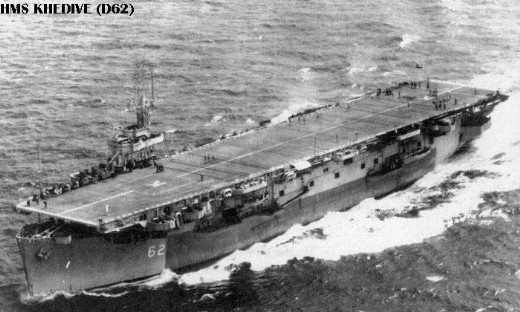
The objective of going to sea at this time was to carry out ‘Post Refit’ trials, which was designed to make sure that the ship was fully operational and able to carry out its duties 100%. The gunnery crews had to practice their drill, but the most important thing, so far as I was concerned, was the calibration of the DF equipment. This was carried out by a small boat circling the ship and at various points and certain times a visual bearing was taken. At the same time I had to take a bearing on a radio transmission from the boat. If there was a discrepancy between the two bearings this had to be noted and allowed for, then taken into account on any bearings taken in action.
The aircraft did their practicing by what was known as ‘Bumps & Jumps’. This consisted of them taking off from the flight deck (Jumps) and circling the ship and landing (Bumps). You may wonder how aircraft can land on the relatively small space of an Escort Carrier without running out of space. Well, on each aircraft there was attached to the undercarriage a hook which was retractable. This hook, known as an ‘arrestor hook’, was lowered when the plane was coming in to land and on the flight deck were sets of spring loaded wires at intervals which were raised when aircraft were about to land. The arrestor caught onto one of these wires and consequently slowed down the aircraft.